Solstice Modular Gravity Station
The deleterious effects of exposure to microgravity are well documented and worsen with time. The long-term effects of exposure to the partial gravity environment of the Moon or Mars are largely unknown. Rotating artificial gravity space stations have been envisioned for nearly a century, but the intermediate steps toward developing such structures are not well articulated. Solstice aims to bridge that gap.
Built on a modular chassis that utilizes existing methods of manufacturing and in-space assembly, Solstice is designed to operate continuously for months or years to enable long-duration study of human physiology and development testing of partial gravity components and systems intended for exploration missions.
This concept will be presented in a technical paper at AIAA ASCEND in May 2026. Here’s a preprint of the paper.
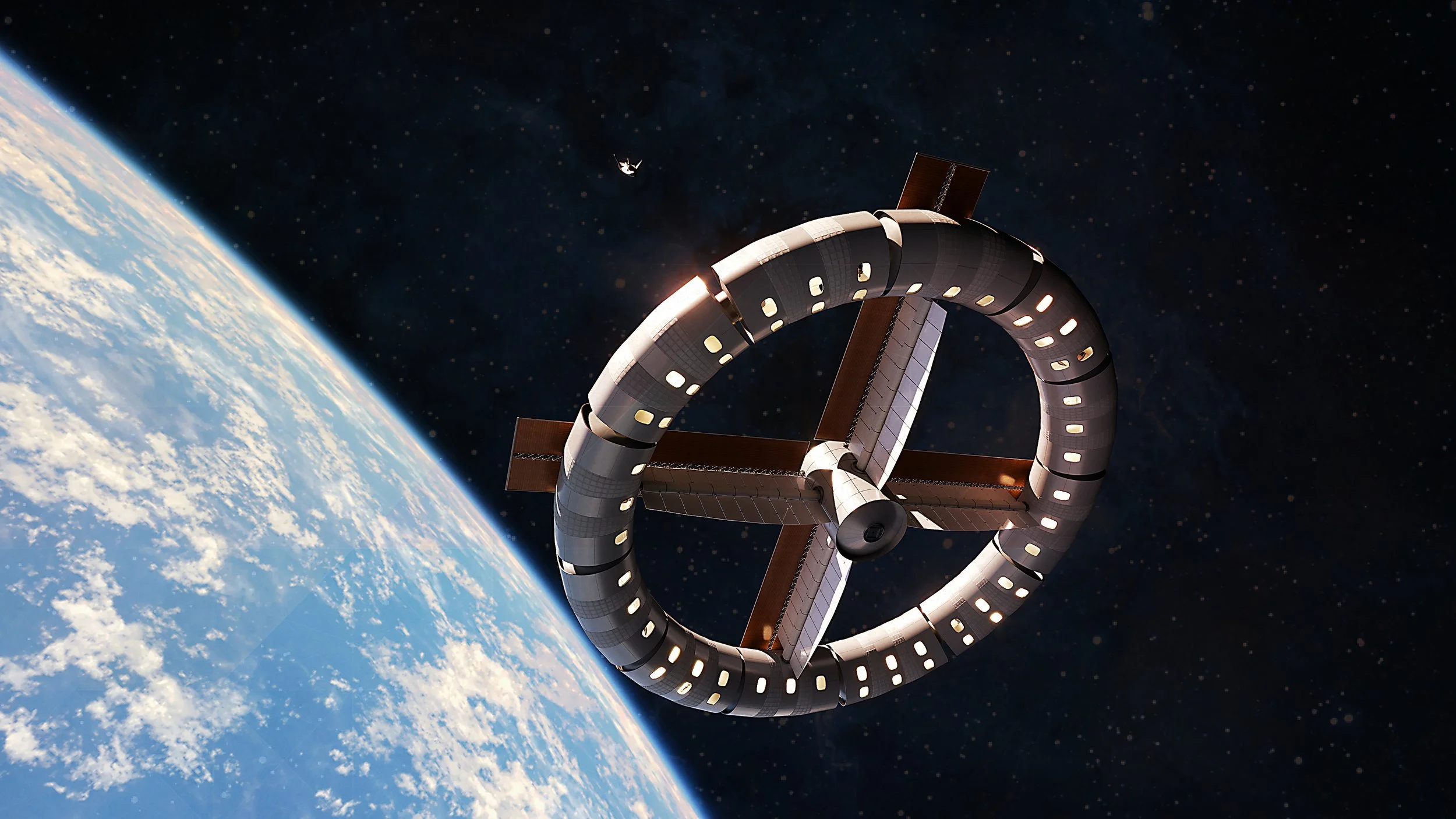
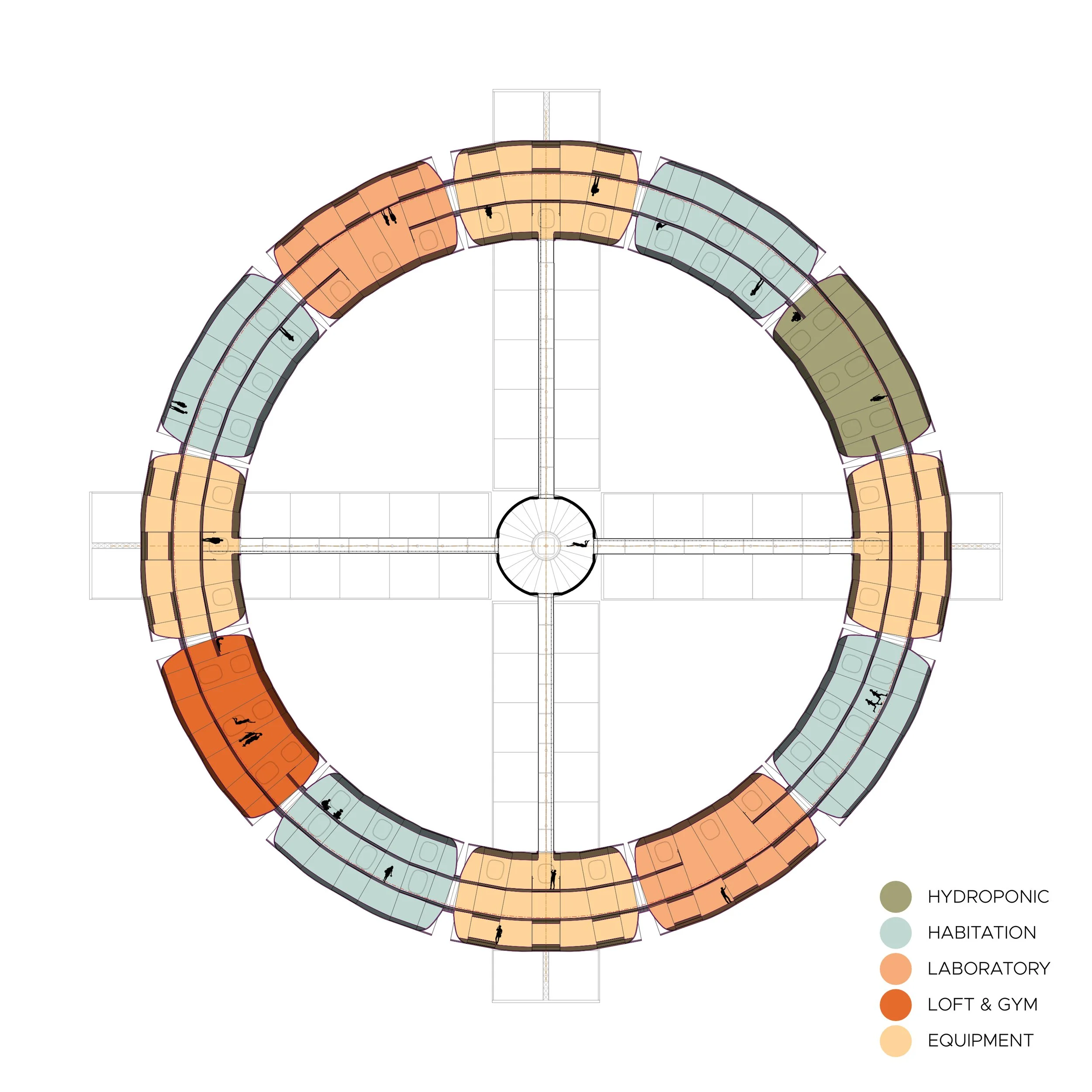
Module programming locates similar activities across the toroid to balance the space station. Equipment modules house the majority of station subsystem equipment and attach to the Core module via pressurized tunnel located in the ceiling. Four habitation modules can be outfitted several ways depending on crew size, with at least one of these housing a galley. Two research modules are similar to the equipment modules but focus on science. The two remaining modules are more open ended in this scheme, shown as hydroponic and mostly open gym modules.
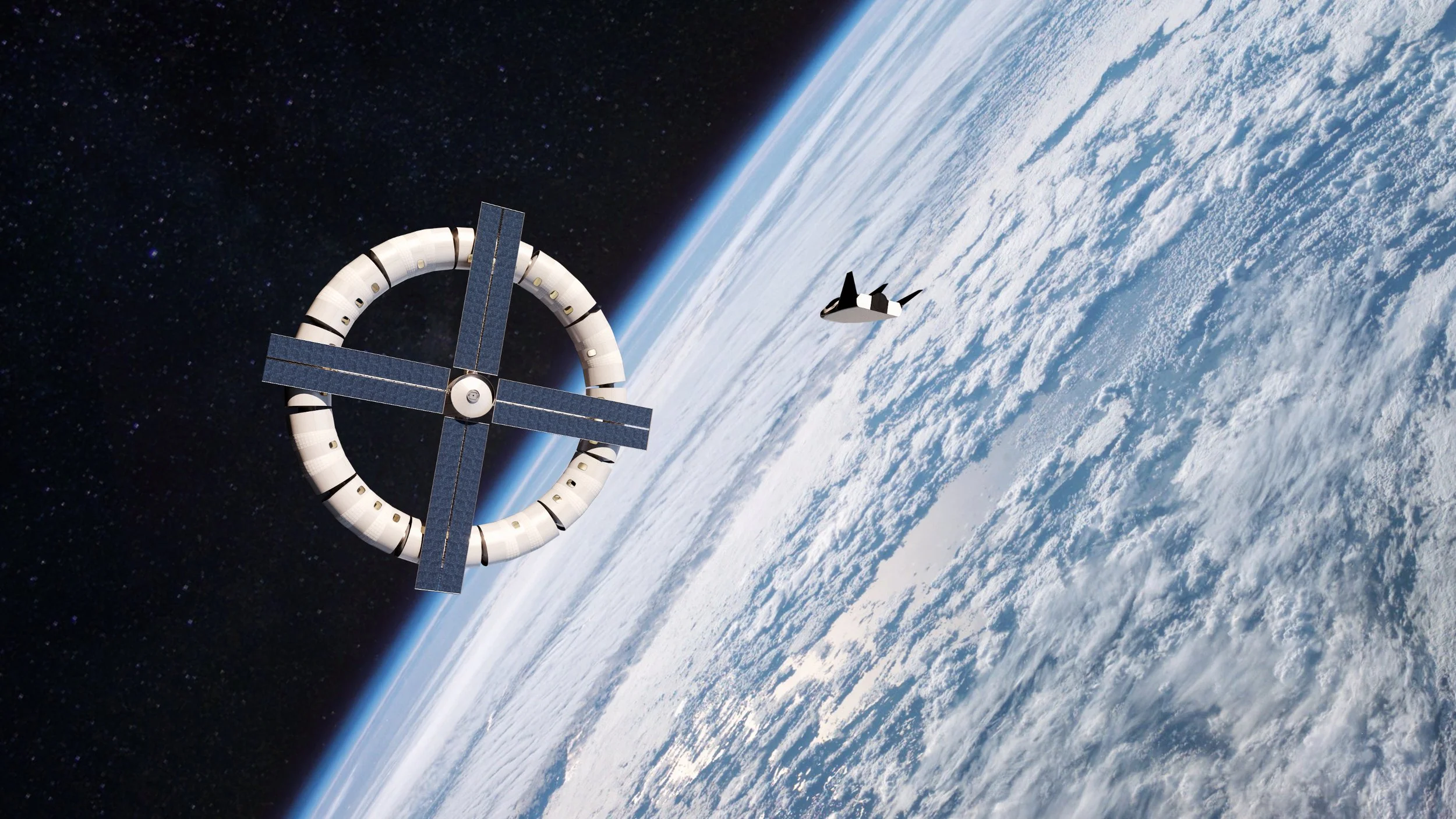
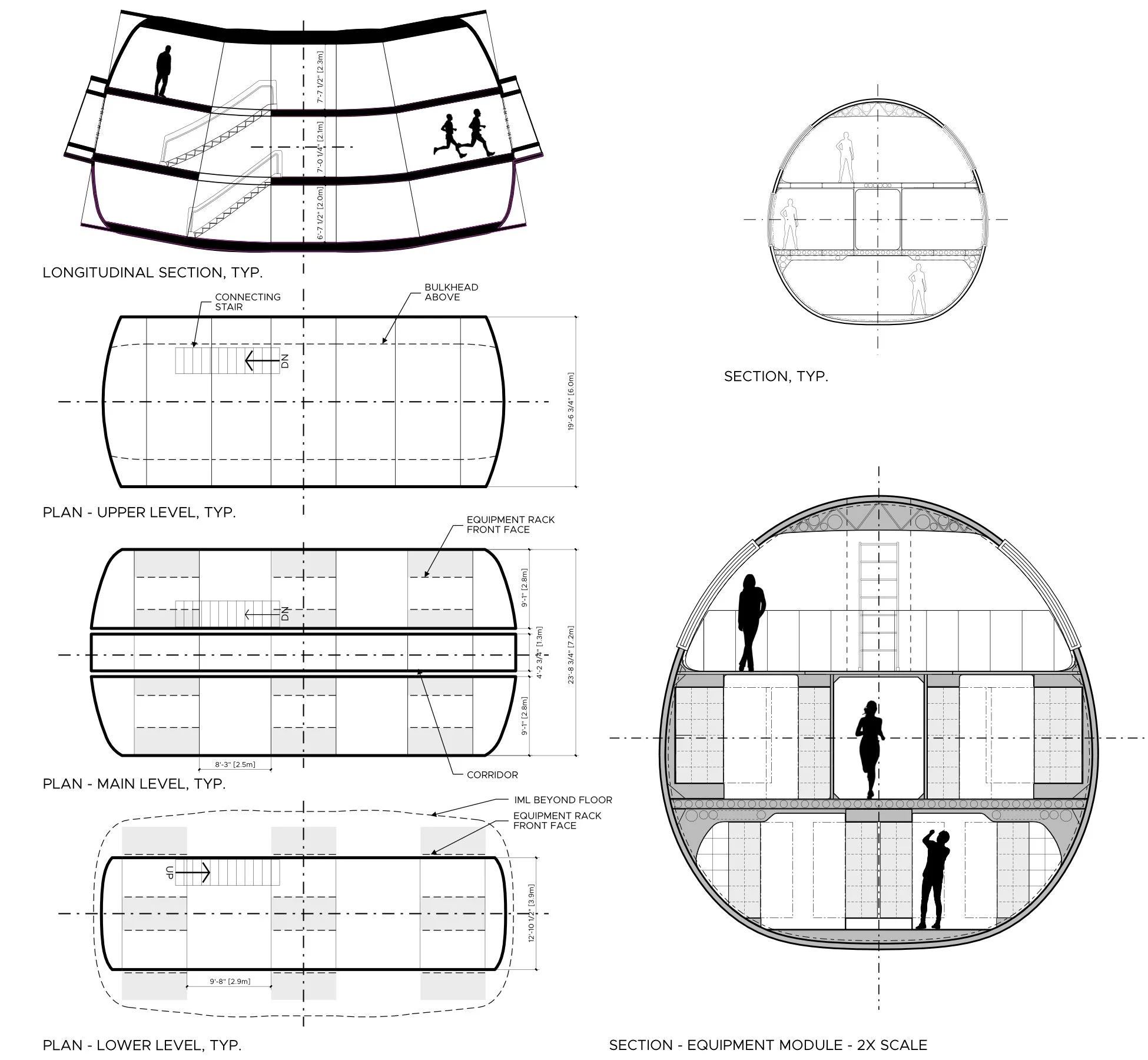
Solstice is designed with specific use cases in mind: development and testing of technologies needed for future partial gravity exploration missions, research on the long-term human physiological consequences of living in partial gravity, and making tasks easier that are difficult in microgravity, such as cooking, eating, hygiene, and exercise.
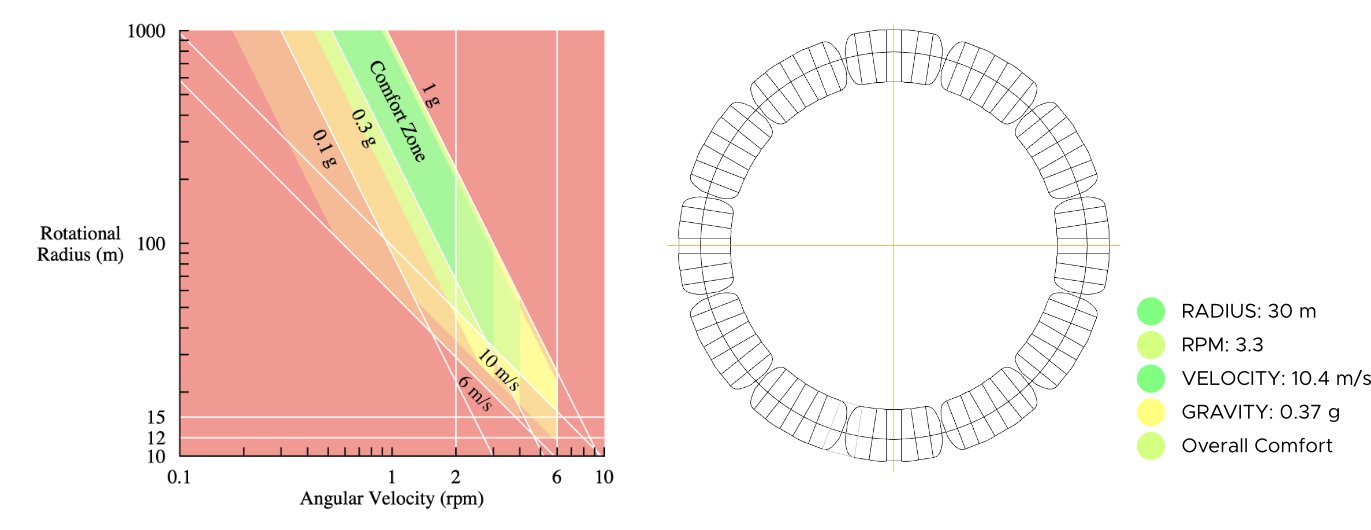
The comfort zone for artificial gravity is defined in existing literature. At 3.3 RPM, Solstice provides 0.37g at the main level to simulate Martian gravity. Slower rotation creates Lunar gravity.
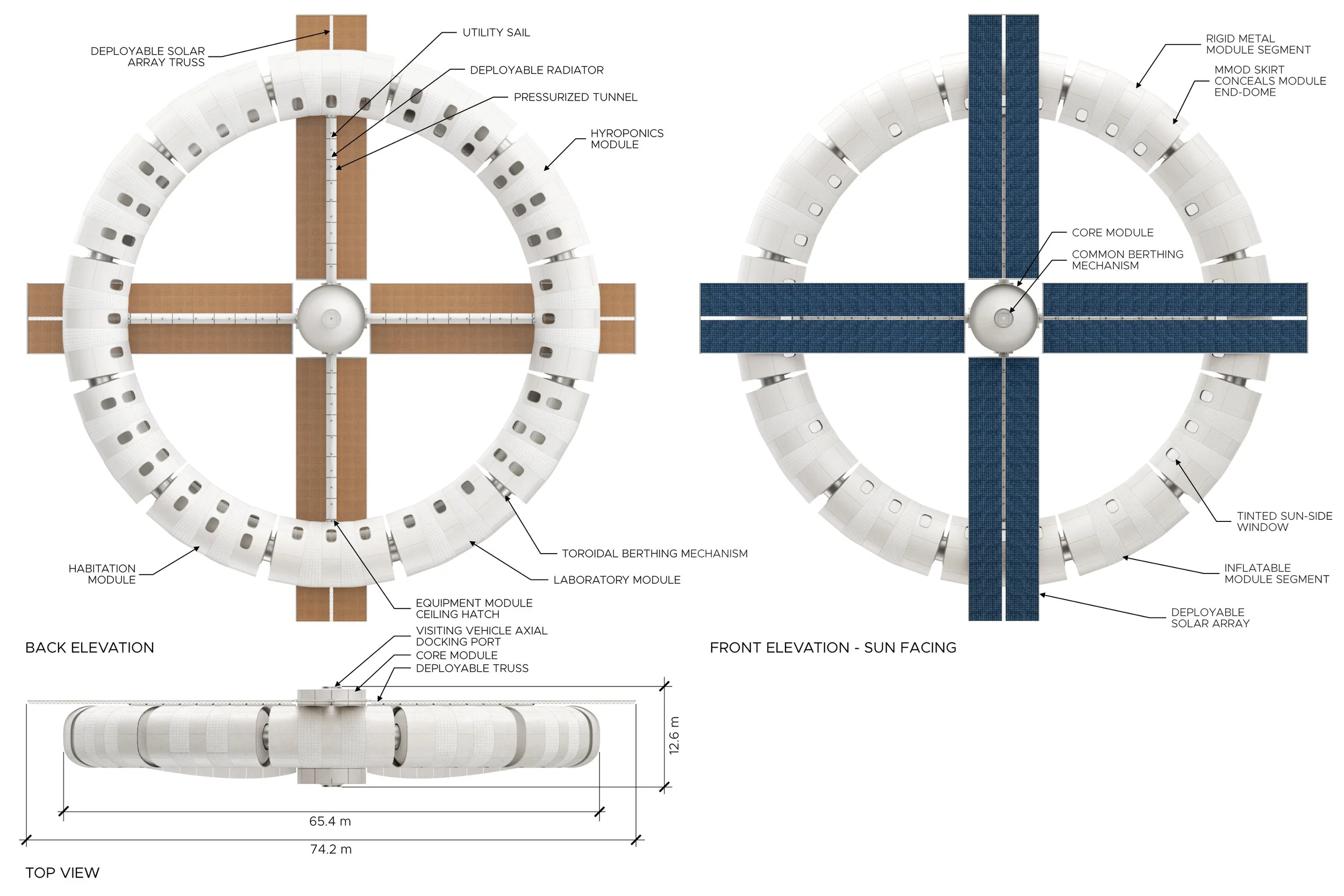
The Solstice module is built up from manufacturable segments and sized to fit in two heavy lift rocket fairings. Compared with similar existing vehicle cross-sections, Solstice may adopt an interior design language of large airliners, but is not subject to aerodynamic forces.
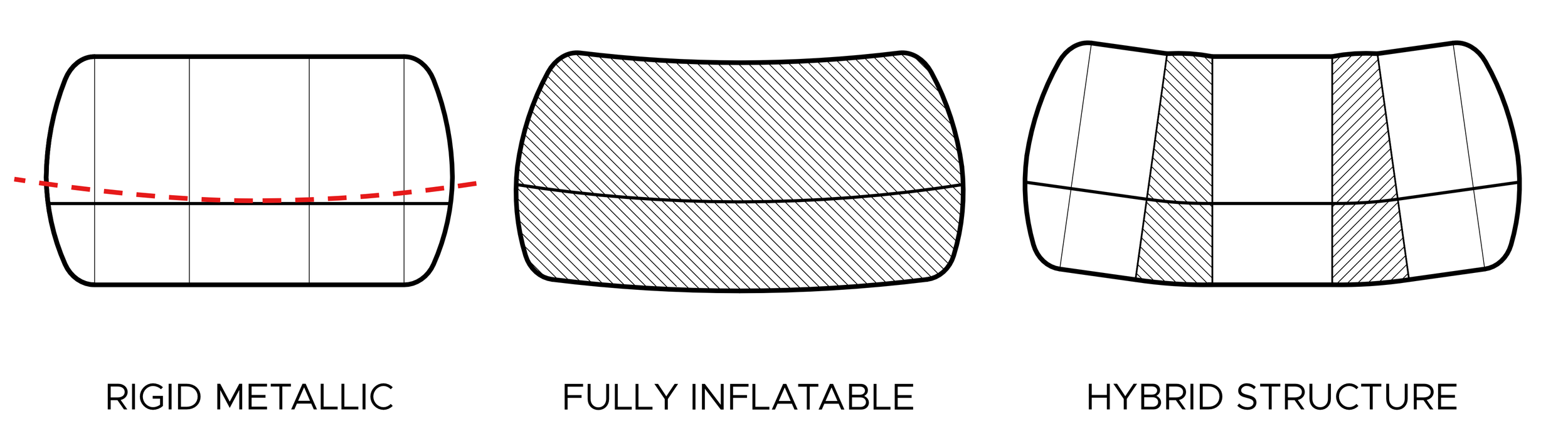
A hybrid structural system combines the best aspects of metallic and inflatable systems, enabling subsystem equipment and secondary structure outfitting on the ground and compact packaging sized for the launch vehicle fairing. Once on orbit, the shaped softgoods sections deploy to create a module oriented to the rotation radius and gravity vector of the space station.
Interiors are still a work in progress, but this view of the main floor of the lab module begins to describe the space. This module accommodates a large number of traditional payload racks, along with a large reconfigurable central volume for more flexibility, and lofted write-up and workspace.
This cutaway view shows the three levels of an equipment module, as well as connections to a habitation module (left), lab module (right), and Core module via Utility Sail tunnel (above).
The on-orbit assembly sequence requires approximately 15 launches, assuming one module per launch but two stowed utility sails could be in one launch. Station outfitting assumes one launch per module, but could end up being much less if packaged efficiently.